Letter from the Editors
In Memory: Jack Foley (1940–2025)
Christopher Bernard
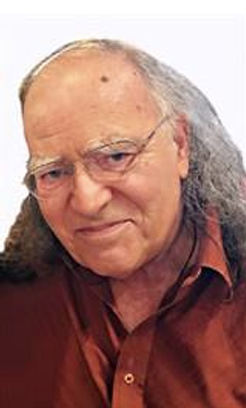
For many years I knew this moment would come. After all, it had come increasingly for my family and friends, in some cases with even less certainty, in some with more. Still, I hadn’t wanted to face the inevitable: from the signs of physical deterioration of the human dynamo I had known for so long, the reduced ability to walk, the move from cane to walker to talk of a wheelchair, the increasing weakness, the signs of pain beneath the brave countenance, the assertive cheerfulness in the performance of life. So, when I saw the announcement on Facebook from a friend and fellow colleague in literature, the shock was mitigated by expectation, but the expectation was undermined by shock.
Jack Foley—innovative poet, brilliant performer, sharp-eyed critic, polymath, radio personality, debater, independent intellectual unhampered by the tender mercies of academia, long-time enthusiastic supporter and contributor to this magazine, champion of my own contributions to the demanding and fickle Muse, and, above all, a friend—died at his home in Oakland, California, on November 3, 2025. He had been suffering from diabetes and sciatica, as he had told me the last few years over our periodic lunches. His death was sudden; it seems to have involved a minimum of suffering, aside from the long collapse of his body; to have happened almost in his sleep—the leaving of this life desired by so many. He now is graced with the mysterious knowledge we all desire yet no one living is allowed to have with any certainty: the knowledge of what follows this life.
Death had often been a subject of Jack’s writing and conversation over the ten years since his wife’s death as, one by one, more of his friends and acquaintances passed from the clutch of life. One of his later books is called, with a brave, whistling-past-the-graveyard flourish, Creative Death (it includes an essay by myself, in which I called our age “The Age of Jack Foley”; he once said he hoped it would be engraved on his tombstone). The topic often came up at our lunches. I once said I found Socrates’ attitude toward our inevitable exit from the shabby play of life the best I knew: either we go to sleep and never wake up, or we get to see all our friends again: the ones who have already died and the ones who will in future. In other words, we face either eternal silence or a second life. How can either be fearful? “And, personally,” I said, “I love to sleep.” “Shakespeare had a reply to that,” Jack responded with his typically sly smile. “’What dreams may come!’”
Not two months ago we had what would turn out to be our last lunch, at his favorite Vietnamese restaurant, his mind as sharp as ever: it would make a tack blush for bluntness. We had our usual sharing of good cheer, gossip, chat about personal issues, trading of stories about current enthusiasms, movies and food, books and music, poets and writers known and unknown—and we had our usual spat over Jack’s inveterate postmodernism, the arcana of deconstruction and the extremis of philosophical skepticism.
I often think of Jack as “the last of the postmodernists,” intellectually charmed by Martin Heidegger (over lunch, we debated Walter Kaufmann’s debunking of the magister of the Black Forest; the debate ended in a draw) and the deconstructionist Paul de Man, who exerted a life long influence on Jack’s philosophy of poetry, an influence no amount of skepticism from others (including yours truly) could shake. I once found myself once trying to “prove” to Jack the “objective truth,” outside of all linguistic sleights of hand, that the two of us had just had lunch at a local bistro and were now sitting at a cafe table debating whether or not we were in a cafe debating whether or not . . . But there is a catch: for a devoted philosophical skeptic, which postmodernism tends to make the true believer, this is impossible to actually “prove”—a fact Jack took complete, and glorious, advantage of. He even admitted, almost sheepishly, once that he always had to have “the last word” in a debate. And sometimes the fons eloquetia ran over indeed: we once almost came to blows when he let me get in less than half a sentence edgewise in the midst of one of his typically brilliant verbal flights. (I sometimes felt Jack missed one of his callings: someone who could give an ex tempore lecture at the drop of a hat on any of a dozen subjects—from the Neoplatonism of Yeats to the diabolism of Baudelaire, from the Anglo-Latin portmanteau polysemy in Milton’s Paradise Lost to the multi-voiced magic of radio drama, from the delights of vaudeville to the inspirations of George M. Cohan—he would have been a very great teacher.)
But these were, in the end, small, even endearing eccentricities such as strong personalities are often heir to; peccadilloes of genius that, once accepted, the rest was a brave sailing, “Jacktalk” (as we called it), full of insights, sharp perceptions, and a treasure of learning.
At that last lunch, we debated one of Jack’s fabulous philosophical pronouncements, made, as usual, ex cathedra: “I don’t believe in the existence of the self!” he announced this time, unprompted, to which I responded, “Then who is Jack Foley?” “Well, that is my name,” he replied. I did not point out that if there is no self, there can be no “my.” I contented myself with a “Well, that’s good enough for me.” And he grinned and returned to his pho.
The idea of the nonexistence of the self may no longer be an issue for him: if self is soul and soul outlasts the body, he may be wondering how he could have gotten it so wrong as he is winged heavenward despite all his flirting with Milton’s Lucifer and Baudelaire’s Satan. If not, the point is eternally moot.
The existence or lack of same of self and soul notwithstanding, Jack’s spirit seems to have kept strong, and very existent, till his last few hours at home with his beloved partner. His death seems to have come as a great shock. Only days before, I had gotten an email containing a photograph of his face with a new growth of fashionable beard and one of his finest recent poems, a “foley” (a form of Jack’s invention) titled “Selfie.” (When I received the email, I was tempted to make a puckish reply: “If the self doesn’t exist, how possibly can a ‘selfie’?” Foolishly, I refrained. It would have led to one of our usual email fencing matches, emails Jack invariably signed “Giacomo,” in commemoration of the Italian heritage of his mother; it would have been our final, compulsively but gently competitive, duels of wit.)
We first met in the mid-’80s, through Nata Piaskowski, warm connector of artists and brilliant, and criminally underrated, photographer who had escaped to California from Poland after much of her family was exterminated in the Holocaust. She had learned about Jack through her friend, the poet Robert Duncan and his partner, the artist Jess. Jack and I were both just getting our literary careers off the ground—and off the ground Jack’s certainly went, with one faction especially in the polyglot world of Bay Area poetry. I went to one of Jack’s first readings of the “choral” poems he made notorious, performed with his warm-hearted, drily witty wife and life partner, Adelle: some years later, she became skilled at that most difficult of poetic forms, the haiku; perhaps the poetic form most removed from Jack’s own explorations.
Full disclosure forces me to admit I had some doubts about the multi-voiced poems Jack invented: through simultaneity, as in the “choral” poems, and by more linear methods, such as what Jack called “foleys,” where he interleaved other people’s poems (and sometimes his own) with lines that responded to, elaborated on, contradicted, or sometimes merely repeated, with the spectral change of emphasis such repetition evokes, the original poem’s lines.
Nevertheless, the multi-voiced poems will remain provocative, and fascinating, experiments that test the limits of poetic meaning and comprehension. That they were welcome in the Bay Area wasn’t surprising, since Bay Area communities often welcome extremes of expression as long as presented with good will, good heart, and clear intelligence. And Jack’s intellectual brilliance and will to experiment, often with great success, were always matched by a profoundly good heart.
It was a heart that went beyond the personal: one of Jack’s many virtues, besides his gift for friendship, was the breadth of his understanding and sympathy for different styles and approaches to poetry: the Muses have rarely had a kinder, more generous, more learned, or more brilliant friend.
In the last few years, Jack began to write and publish plays and short fiction as well as poems. He also spent years writing what may prove his most enduring legacy: a “timeline” of California poetry, a two-volume magnum opus titled Visions and Affiliations: A California Timeline, Poets & Poetry 1940–2005, an essential source for scholars and lovers of American poetry written at the turn of the millennium.
I would be remiss in neglecting Jack’s weekly radio program on KPFA, Cover to Cover, which ranged for four decades across poetry and literature with as much as wisdom as erudition.
For this alone the literary world would owe him its gratitude. There is no one who can possibly replace him. Modern poetry has lost one of its noblest champions as well as one of its bravest innovators.
The morning after I heard of Jack’s passing, I wrote the following:
Atque Vale
Hail, Giacomo, poet who thrust
enigmas of language to the edge of paradox,
invented a genre or two, exploded
myths of meaning and freed the poem
from hobbles of cliché and the received folly
of academia and publishers afraid
of readers as of their own ink-smeared shadows;
whose warm heart comforted the peculiar loneliness
of poetry, and spread the word on the word
from page to podium to KPFA.
Hail, Giacomo, loyal champion and friend,
though we tangled over much, we agreed on this:
the love of good friends and the love of the word
are among the strongest shelters and shields
against the raging storm of the world.
Hail, noble mind, powerful spirit and heart,
marvelous poet, munificent lover of art,
one of the few known to me who deserve the grand title
of “genius,” rarest flower in the human fields,
where blossoms have been many but fruits few where they fell.
Hail, Giacomo, hail and farewell.
—Christopher Bernard
[For a filmed reading of this poem, visit the Filmed Reading section.]
Christopher Bernard is an award-winning poet, novelist and essayist and a co-editor, as well as the original founder, of Caveat Lector. His third collection of poems The Socialist’s Garden of Verses won a PEN Oakland Josephine Miles Award and was named one of “The Top Indie Books of 2021” by Kirkus Reviews. His novels include Voyage to a Phantom City (“an enormous achievement,” award-winning translator Peter Bush), and Meditations on Love and Catastrophe at The Liars’ Cafe (“puts one in mind of Ulysses as much as Naked Lunch,” award-winning poet Ernest Hilbert). .Two of his most recent books are the middle-grade stories, the first in the “Otherwise” series, – If You Ride A Crooked Trolley... and The Judgment Of Biestia, which won an Independent Press Award in Preteen Fiction in 2025 and was a finalist for the K. M. Anthru International Prize 2024. His debut novel, A Spy in the Ruins(“one of the best American novels since Thomas Pynchon and William Gass,” Miguel de Cervantes–award winning novelist Juan Goytisolo), was relaunched in October 2025 to celebrate its twentieth anniversary. His latest book, The Beauty of Matter: A Pagan’s Verses for a Mystic Idler, appeared at the end of 2025.